
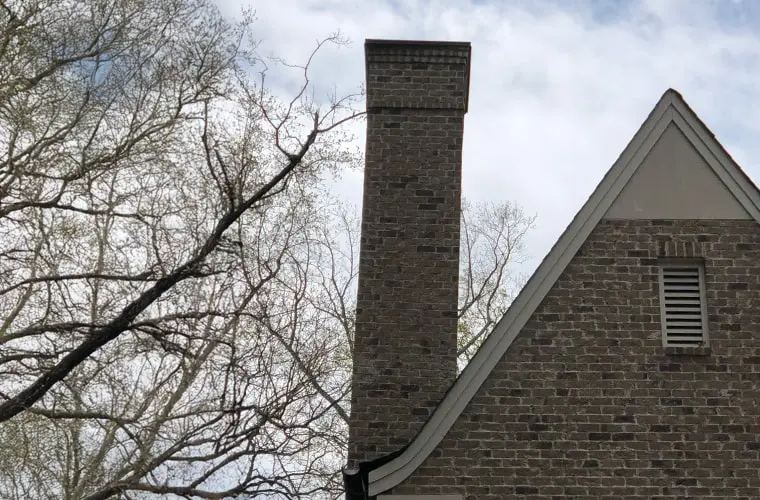
If you’ve noticed your chimney appears to lean, tilt, or pull away from your home, it’s easy to assume it’s simply an aesthetic issue. After all, many older homes develop small imperfections over time.
Unfortunately, a leaning chimney is almost never “just cosmetic.”
A chimney that is no longer perfectly vertical is often a sign of an underlying structural problem. While the lean may develop gradually, the cause is usually continuing to worsen. Addressing the issue early can help protect your home, prevent more extensive damage, and avoid significantly more expensive repairs down the road.
What Causes a Chimney to Lean?
A chimney is one of the heaviest structures attached to your home. Over time, several issues can cause it to shift out of position, including:
Foundation Settlement
Many leaning chimneys are caused by movement in the foundation beneath them. As the soil settles or shifts, portions of the chimney can sink unevenly, causing the entire structure to lean.
Water Damage
Water is one of masonry’s biggest enemies. Moisture can erode mortar joints, weaken bricks, and contribute to foundation problems over time. Poor drainage, damaged flashing, or years of water intrusion can all affect the chimney’s stability.
Freeze-Thaw Cycles
When water enters small cracks in masonry, it expands as it freezes and contracts when it thaws. Repeating this cycle season after season can gradually weaken the chimney’s structure and accelerate movement.
Deteriorating Masonry
Bricks and mortar naturally wear over time. If repairs are delayed, weakened masonry may no longer adequately support the chimney’s weight, allowing it to shift.
Why a Leaning Chimney Should Never Be Ignored
Even if your fireplace still appears to function normally, a leaning chimney can create serious safety concerns. Depending on the cause, problems may include:
- Falling bricks or loose masonry
- Water intrusion into your home
- Damage to the roofline or flashing
- Cracked chimney liners
- Reduced structural stability
- Increased repair costs as damage progresses
In severe cases, a chimney that continues to separate from the home can become unstable enough to require a partial or complete rebuild. Early intervention is almost always less costly than waiting until the damage becomes extensive.
Warning Signs to Watch For
A chimney doesn’t have to lean dramatically before it needs professional attention. Common warning signs include:
- A visible gap between the chimney and the house
- Cracked or crumbling mortar joints
- Stair-step cracks in the brickwork
- Leaning that appears to worsen over time
- Interior wall or ceiling cracks near the fireplace
- Water leaks around the chimney
Even small changes can indicate movement that’s continuing behind the scenes.
How Professionals Evaluate a Leaning Chimney
The first step is determining why the chimney is moving.
During an inspection, a qualified chimney professional will evaluate the overall structure, foundation conditions, masonry, flashing, crown, and any signs of moisture damage or separation from the home. Identifying the underlying cause is essential because simply repairing visible cracks without addressing the source of the movement will not solve the problem.
Depending on what is found, repairs may involve masonry restoration, foundation stabilization, rebuilding damaged sections, or correcting water-related issues before further structural work is completed.
Don’t Wait for the Problem to Get Worse
A leaning chimney rarely corrects itself, and it almost never stops moving without intervention.
If you’ve noticed your chimney leaning, separating from your home, or developing new cracks, scheduling a professional inspection is the safest next step. Catching structural issues early often leads to simpler repairs, lower costs, and greater peace of mind.
At Spark Chimney, we help homeowners identify the cause of chimney movement and recommend the right repair solution to restore both safety and structural integrity. If you’re concerned about a leaning chimney, contact our team today to schedule a professional inspection.